Heated public debate in Šavnik: Citizens demand tourism development and say they will defend their property by all available means

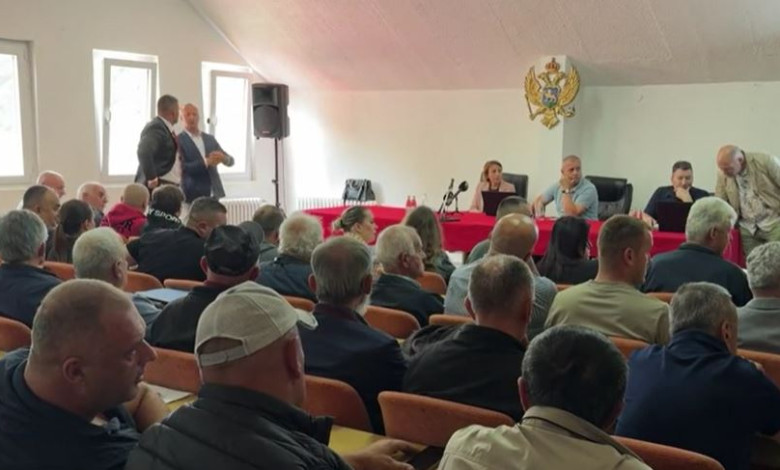
The hall of the Municipality of Šavnik was too small to accommodate everyone interested in the central public presentation of the Draft Amendments to the Spatial-Urban Plan of the Municipality of Šavnik and the Strategic Environmental Assessment Report. Representatives of several Šavnik villages said they would not allow their properties to be taken away and destroyed through expropriation in the interest of private energy companies planning to build wind farms and solar power plants in this area, but that they instead want to focus on the development of rural tourism and agriculture.
They say they are not against development, but that development must be in the interest of citizens, and not to their detriment.
Residents of Šavnik and Nikšić: The Government is unlawfully seizing private property in favour of the Arab company Alcazar Energy Partners
ME Government Uses EU Harmonisation as a Cover for Granting Privileges to Energy Investors
Residents of Piva and Šavnik: Cadastre Illegally “Writes and Erases” on Private Properties, Bulatović Approves – In Whose Interest?
Dragan Mandić from the village of Duži confirmed that property owners had received expropriation decisions in favour of the private company Alcazar Energy Partners, which plans to build the Bijela Wind Farm in the Municipality of Šavnik. He said that Šavnik residents are not opposed in principle to energy projects, but that they demand that such projects be carried out in accordance with regulations, and that their property not be destroyed — property which, as they said, they will defend by all available means, including blockades and protests, if necessary.
He also said that the villagers, with around 60 signatures, had submitted written objections, mostly concerning the construction of transmission lines for the needs of the Bijela Wind Farm project, as well as other planned transmission lines.
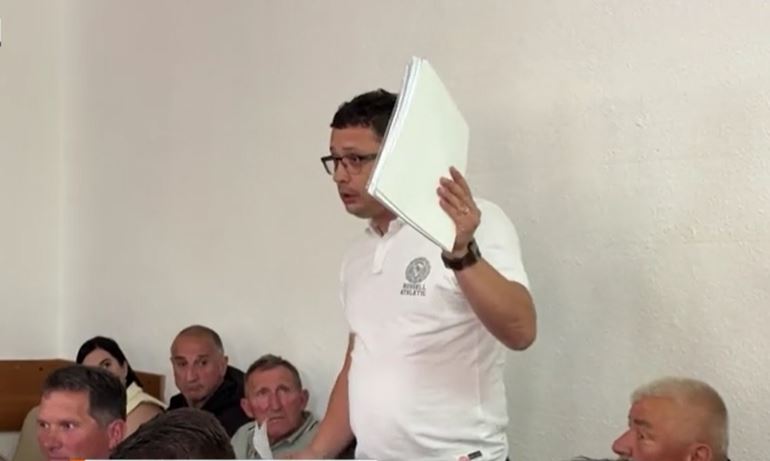
“Land is currently being seized in Duži. I personally received a decision on the expropriation of land for the Bijela Wind Farm at 0.50 cents per square metre. At two public debates, we were told that this had to be done that way, and that if we did not want to give our land, the state would take it from us. We are conducting court proceedings and have also filed lawsuits against the Government. There are already two transmission lines in the village of Duži, and this third one they want to install goes in a zigzag pattern, so that, by chance, not a piece of our land remains ours. We have been pushed into a corner,” Mandić said.
Vesna Radojević from the Civic Initiative “Save Brezna” also believes that the Draft Plan is conflicting and incomplete. The Plan, she said, at the outset highlights the development of ecotourism, agriculture and the production of healthy food as the main development direction, which, she stressed, is Šavnik’s only development opportunity.
“Šavnik has miraculous and untouched nature and enormous undeveloped potential in that sense. However, at the same time, numerous renewable energy sources, solar and wind power plants, as well as reservoirs on the beautiful rivers of Šavnik, have been drawn into the plan. These are not at all harmless to nature and do not bring direct benefits to the local population. There is no employment, no economic development, no benefit for the people who live here. There are, of course, taxes paid to the local self-government, but I am now speaking about the citizens,” Radojević stressed.
She asked the planners to explain on what basis they had drawn locations for renewable energy sources into the Spatial-Urban Plan.
“Where are the studies, reports and analyses of the impact of energy facilities on ecotourism, agriculture and livestock farming? Will the best agricultural land and pastures be paved over with solar panels, will forests be cut down? Where is the analysis of the conflict with the development of ecotourism and agriculture?” Radojević asked the representatives of the planners.
She emphasized that the Ministry of Spatial Planning, Urbanism and State Property had proposed, and the Government adopted, amendments to a set of laws intended to enable investors to build energy facilities without any control, without public debates and without the participation of citizens. Among others, she said, these include amendments to the Law on the Use of Renewable Energy Sources, where, under Article 11e, energy facilities are declared facilities of overriding public interest. Amendments to the Rulebook of the Environmental Protection Agency have also been adopted, exempting investors in energy facilities from the obligation to prepare environmental impact assessment reports.
The President of the Municipality of Šavnik, Jugoslav Jakić, said that energy facilities would be built in Šavnik only according to clearly established rules and procedures, and that he would not allow the seizure of residents’ property.
“Whether the Government will seize land somewhere in Montenegro interests me less at this moment. In Šavnik, neither the Government of Montenegro nor anyone else could seize land, and neither will the Government of Montenegro. That story cannot pass here. Construction here will be carried out according to strict standards and regulations, with serious monitoring both by the local administration and by the population,” Jakić said.
Saša Karajović, a member of the team preparing the Spatial-Urban Plan of the Municipality of Šavnik, said that all proposals and suggestions from the residents would be considered, and that the drafting of the document was still in its initial phase.
“As far as I understood, there is a separate line from the state level that can also enable the construction of these facilities. As for our plan, we have identified those zones as potential ones, but this is only a reservation of space for a possible use, and not a binding provision,” Karajović said.
Residents of Šavnik also say that, together with their neighbours from the Piva village of Brezna, they have initiated numerous lawful proceedings and that in some of them they have already proven that the projects threatening them are unlawful. The Ministry of Ecology annulled the “green permit” that the Environmental Protection Agency had issued for the Bijela Wind Farm and returned the procedure for reconsideration. The residents have also initiated complaint proceedings before the European Bank for Reconstruction and Development – EBRD – claiming that, when approving credit support, the Bank failed to comply with its own rules and standards in the protection of nature and civil society engagement.